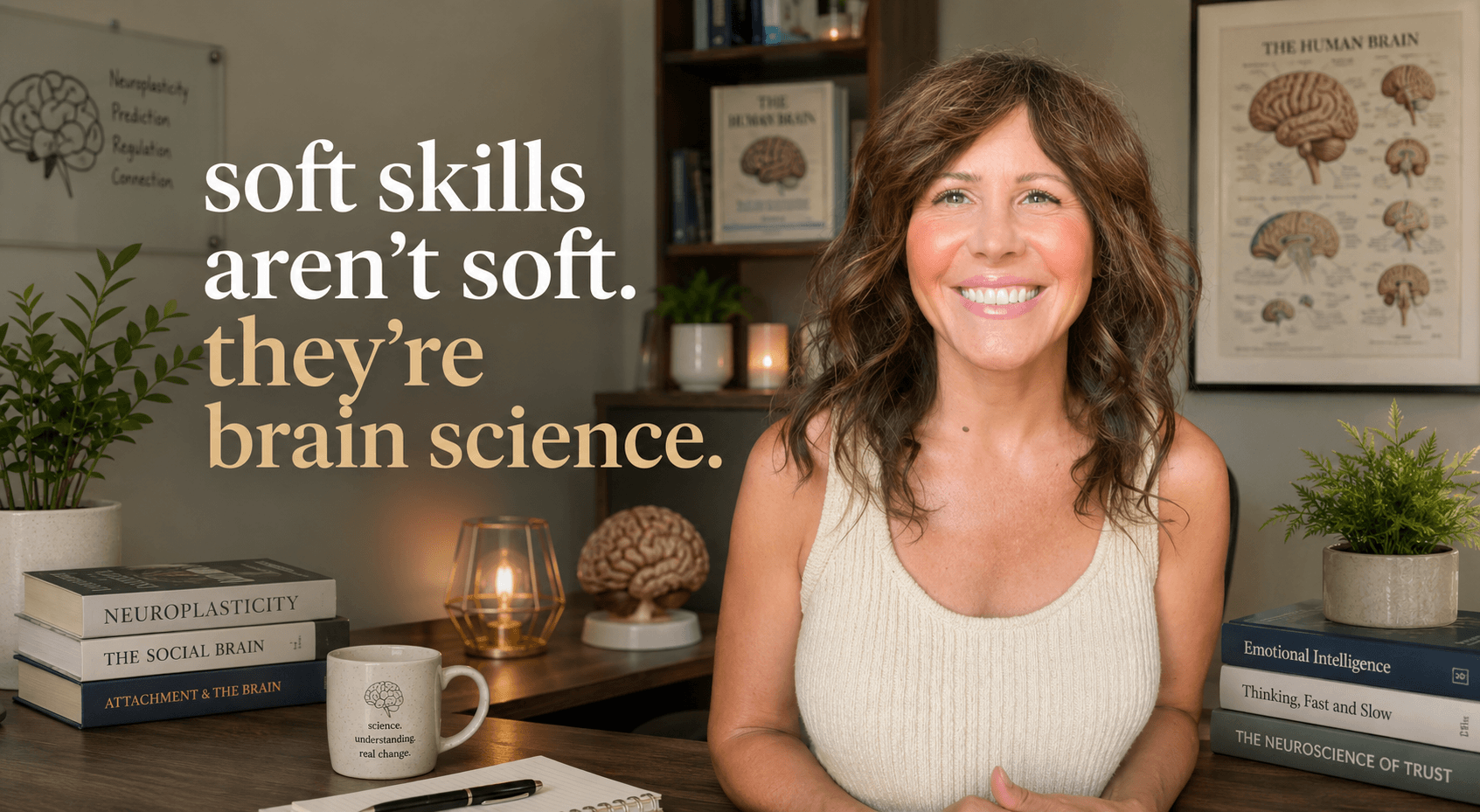
SOFT SKILLS AREN'T "SOFT". THEY'RE BRAIN SCIENCE.
TRUSTED BY



If you're a coach, leader, helping professional... you already help people change their lives.
Neuroscience is what makes that work undeniable:
to your clients, and to the rooms you want to walk into next.
Every human being carries capacities that can become obscured by experience.
My work is to help the people who guide others understand the biology of how those capacities become visible again.
When you can speak to the intelligence of the embodied nervous system and the power of the human brain,
two things shift at once:
- you attract and engage more attention to your work, because you help others understand the systems driving them, and
- you get taken seriously by the audiences, stakeholders, and decision-makers who used to feel out of reach.
"I consider Stefanie my neuroscience teacher, and studying her body of work keeps me in the practice of using neuroscience as a powerful lens to understand my teaching more deeply and from a research-backed perspective.
Stefanie has a unique ability to make neuroscience accessible and deeply meaningful."
-Charles Krigbaum, Founder and Director of the North Texas School of Talent Education
I'm so glad you're here!
One of the things I've come to understand through decades of studying, teaching and working with the science of human learning and potential is that...
There are people in the world right now who could benefit enormously from what you know.
People who could experience new possibilities because of something you help them understand, learn or experience.
And yet...
Some of those people may never discover the value of your work.
Because the ideas and practices that help human beings grow, adapt, regulate and thrive are still so often dismissed as "soft skills."
Imagine what could become possible if more people understood the neuroscience behind what you do.
The clients who might finally recognize the value of your approach.
The organizations that might invite you into conversations you haven't yet been part of.
The people who might begin seeing you as the expert you already are.
This is something I've experienced in my own career, and it's one of the reasons I'm so passionate about helping other professionals learn to communicate the science behind their work.
Science woven into your essence, your understanding, and your messaging makes you one of the practitioners people trust, quote, and remember.
That's the edge I help you build, so you can keep doing what you do best - with more authority, more reach, and more impact.
"Your courses help guide me to be able to see my own self more clearly."
These courses are packed with insights that I revisit modules with reflection on my own experience, and new exploration.
The beautiful thing about the courses I’ve discovered so far and keep going is the emergent evolution of my own seeing.
I am able to notice the human in the being moment and the human in my ideas about myself and others.
I feel like I am able to sense the wisdom underneath the layers of ideas.
Thank you for bringing the science guiding access to the space of humanity's inner wisdom.
-Diep Tran, participant in the Teach the Nervous System and Teach Mindset Science Courses
These micro-courses are the foundation for that neuroscience edge.
Use these courses to deepen your understanding, copy and paste phrasing that feels aligned for you and watch to see how people engage in new, exciting ways about concepts that might have previously been dismissed as "soft skills".
TEACH THE NERVOUS SYSTEM MICRO-COURSE:
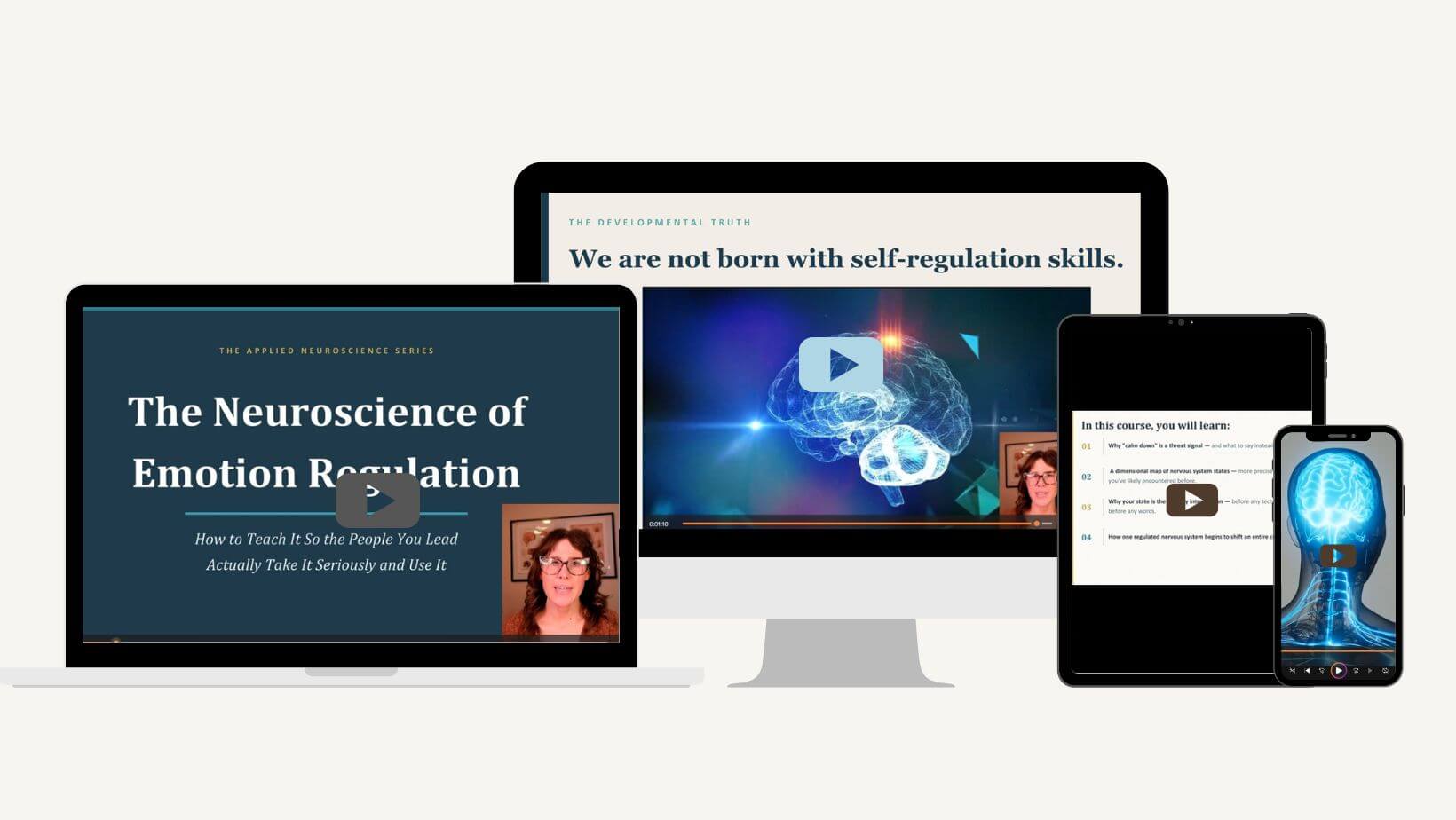
How to Teach Nervous System Regulation so that Even Skeptics Use It - Without it Getting Dismissed as "Soft Skills"
For coaches, leaders and helping professionals who know nervous system regulation is a key to learning, performance and 'hard outcomes'.
Learn how to move people from "this is just soft skills" to "where do I sign up?"
ADAPTIVE BRAIN: THE SCIENCE OF SETBACKS, MINDSET & CHANGE
How to Use Brain Science to Help Others Overcome Setbacks, Build Adaptability, and Believe in Their Capacity to Change
Nine short modules on explaining setbacks, discomfort and change the way the brain actually processes them, so people keep going, and stay interested in the tools and ideas you offer.
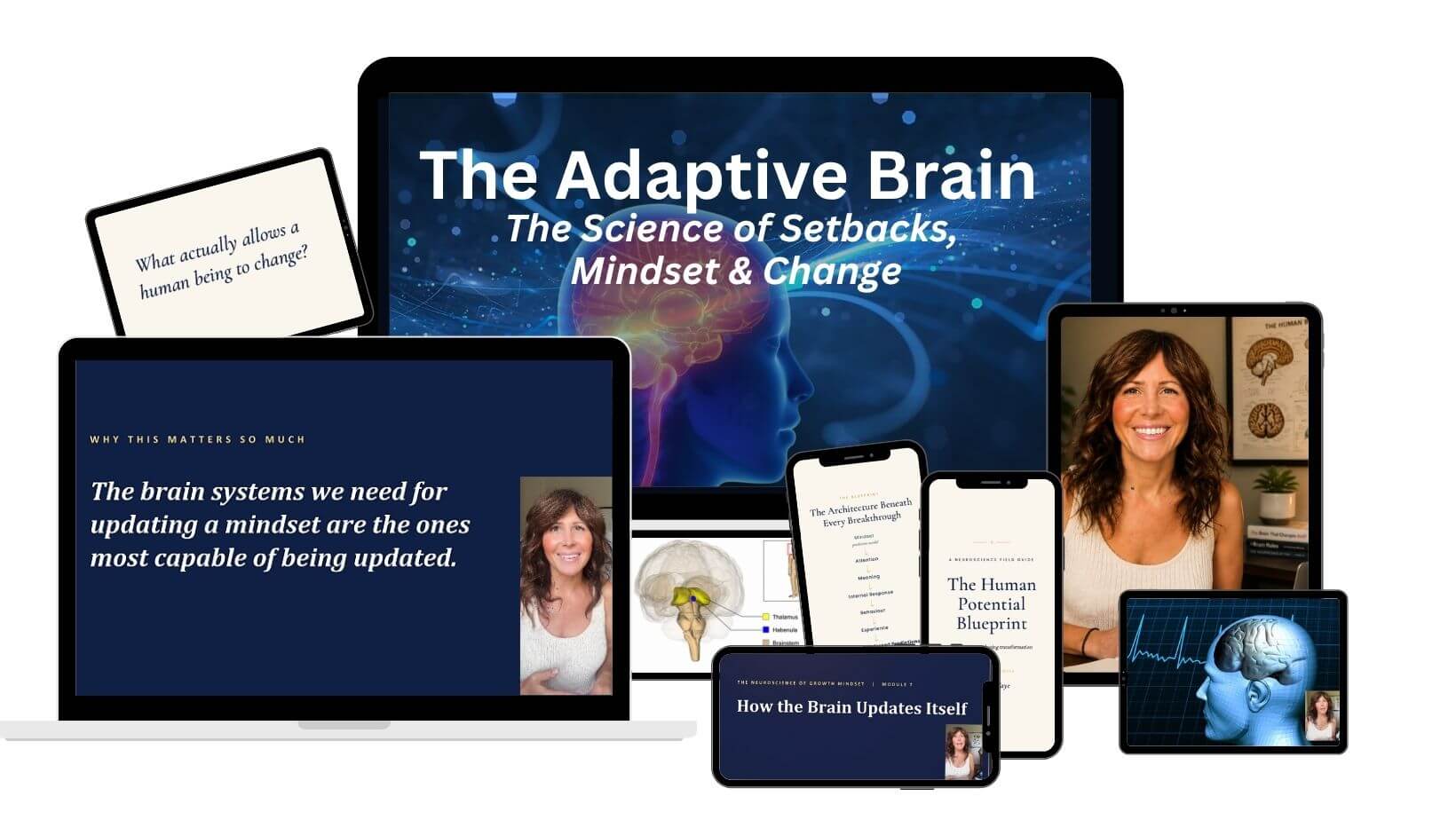
"I just completed the Adaptive Brain and it was fantastic. I am a self-leadership coach and I will be integrating all of this in my own life and teaching it as well, to my clients and other leaders. Thanks for offering these amazing courses at an affordable rate. It has already made a difference in how I podcast and coach. My clients are experiencing the benefits too."
-Rachel Tamilio, Certified Executive Coach · John Mattone Global (JMG)
REACH THE RESISTANT MIND
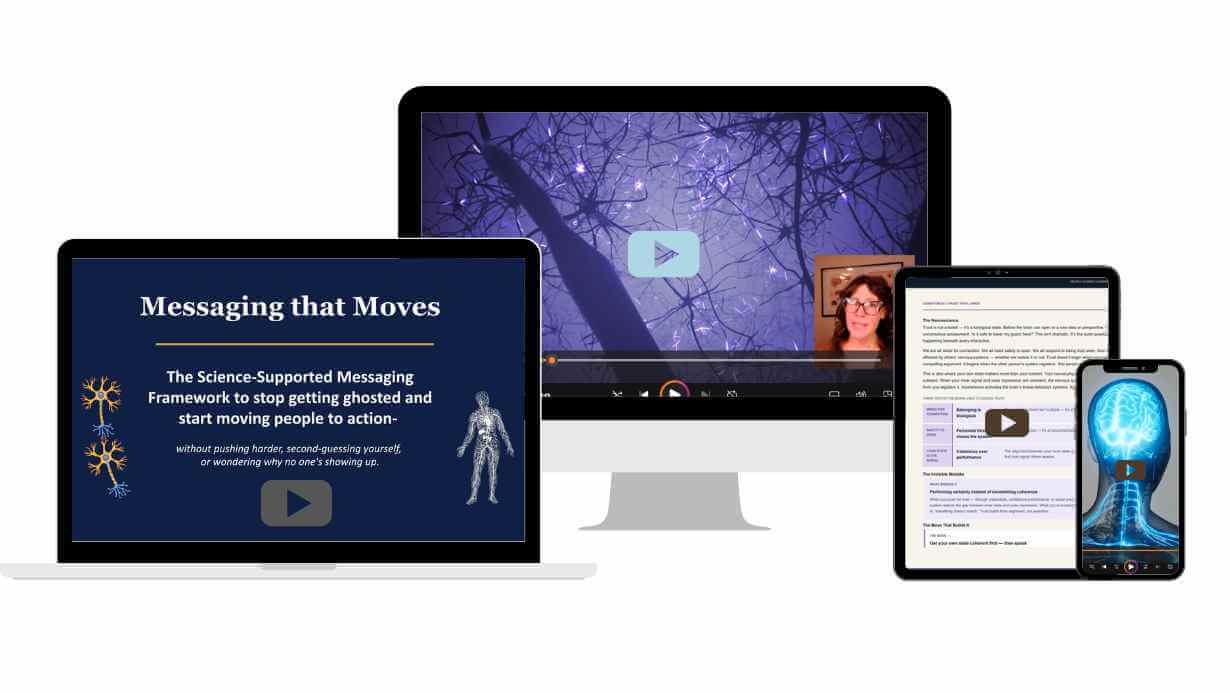
Turn Resistance into Readiness - without convincing, correcting, or coercing.
The science of nervous system buy-in for coaches, leaders and helping professionals:
From "I'm not buying it" into "Tell me more"
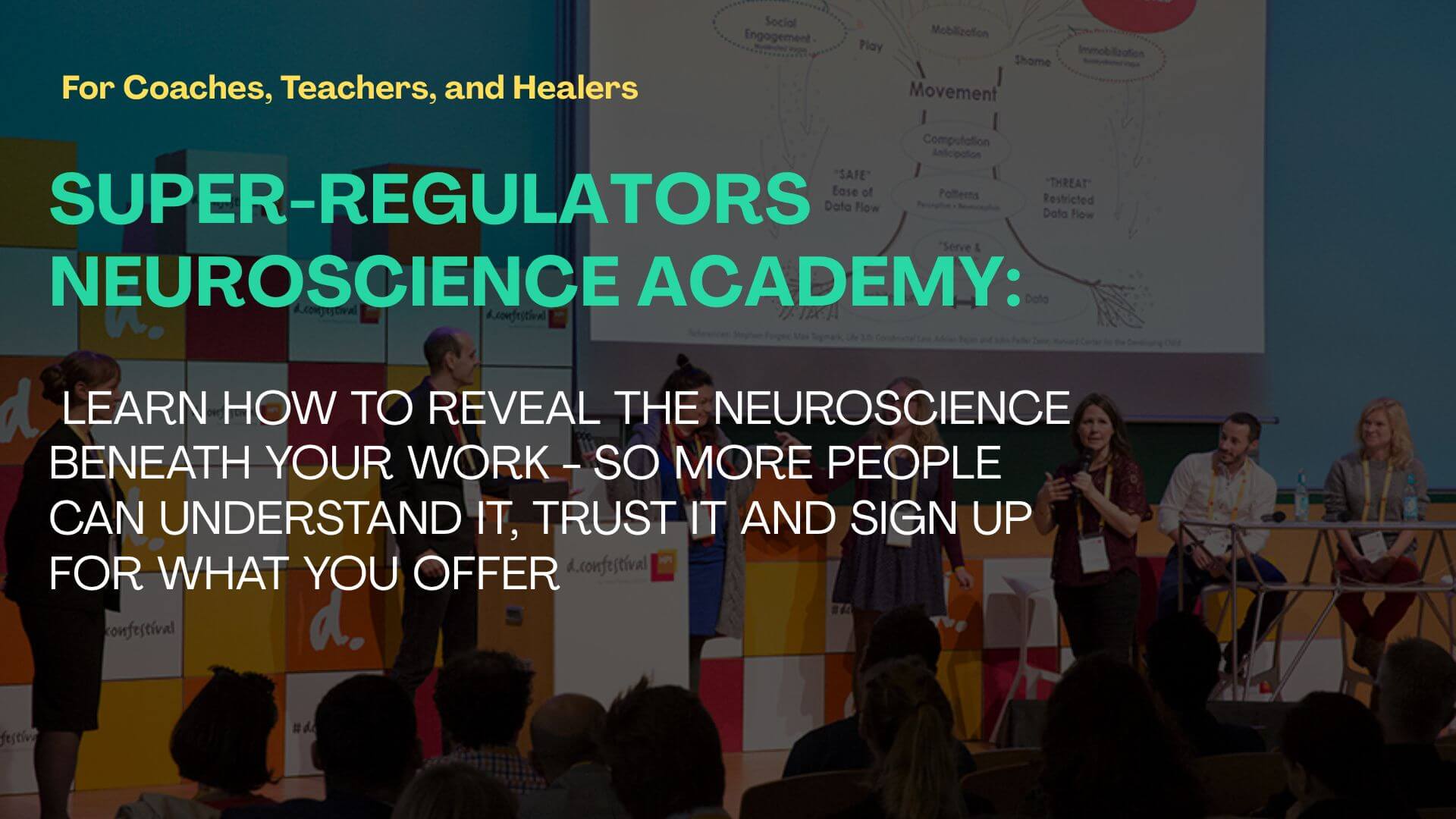
Super-Regulators Neuroscience Academy
Experiential, in-depth learning community for coaches, helping professionals and thought leaders
Your nervous system isn't just yours.
Every signal you send—visible, audible, felt—
is being picked up by the nervous systems around you. And theirs are affecting you.
So the question isn't just: "Am I regulated?"
It's: "What am I contributing to the field?"
How I Get Skeptics to Actually Engage with "Soft Skills" (Without Over-Explaining or Second Guessing Myself)
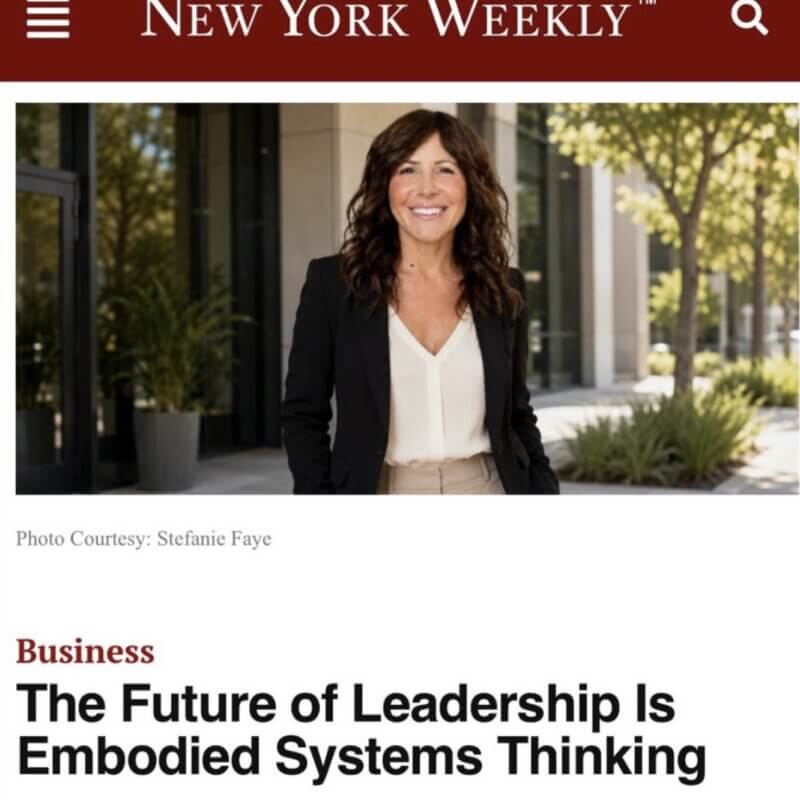
The Future of Leadership Is Embodied Systems Thinking
The leaders who will guide us through complexity, polarization, and problems that seem to repeat themselves, are the ones learning to work with the biology of how humans actually perceive, connect, and change.
That comes down to three capacities working together: read about them here
Distinctives of my Mission, Content and Training:
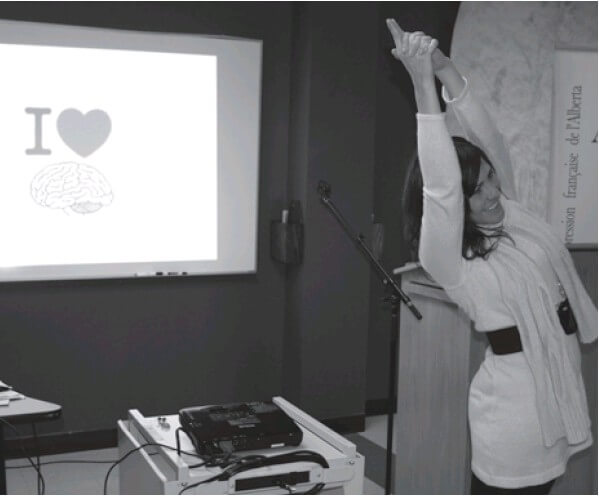
An intentional de-emphasis on 'skill acquisition':
Get to the deeper roots of human development, which begin with insight, and "un-blurring our vision" from misunderstandings of behavior and knowledge.
A focus on the 'aha moments':
Increase self-awareness - and from there, come up with new, ever-evolving ideas that improve knowledge, innovation, and deeper learning.
The other distinctives:
- I don't believe in learning just to promote one's own ideas of success.
- We are all learners who never stop learning, and we do this to make life collectively feel easier for all living beings.
- We learn in order to open up channels for new ideas and the evolution of knowledge itself.
- Unique forms of genius exists in everyone and it's up to us as a species to help as many of us recognize what our personal form of genius is.
- If that sounds like it blends well with your vision, I hope you'll keep reading and watching...
Here's how focusing on Mindset, Embodied Neuroscience and Systems Thinking transforms the lives of professionals and the people they serve...

"very informative and digestible to pass onto others in our work"
"Thank you Stefanie. I run a charitable Trust that has a focus on assisting people with Depression and Anxiety. I follow your podcasts and have got my partner onto them as well. We both find these so helpful in our line of work (She is a clinical psychologist) and find your content very informative and very digestible to pass onto others in our work. Thank you for what you do." - A. Jackson
"practices that I have learned, embodied and now teach my clients"
"I’ve been following Stefanie and her work for years. I was introduced to her work at a workshop when I was a special ed teacher. I immediately was fascinated and at the time felt called to embody growth mindset myself before trying to teach it to children. I attended many of her weekend incentives and also masterminds. Her podcast and content have great value! Especially if you are in any role of authority and leadership. These are practices that I have learned, embodied and now also teach my clients as an entrepreneur." - S. Streit, Teacher
"life-changing insights"
"Your comments about perseverance gained by applying our strengths to a self-transcendent purpose have informed our practices around how we at Harrigan Solutions develop our employees. Thanks for these life-changing insights." - Bill Harrigan, CEO
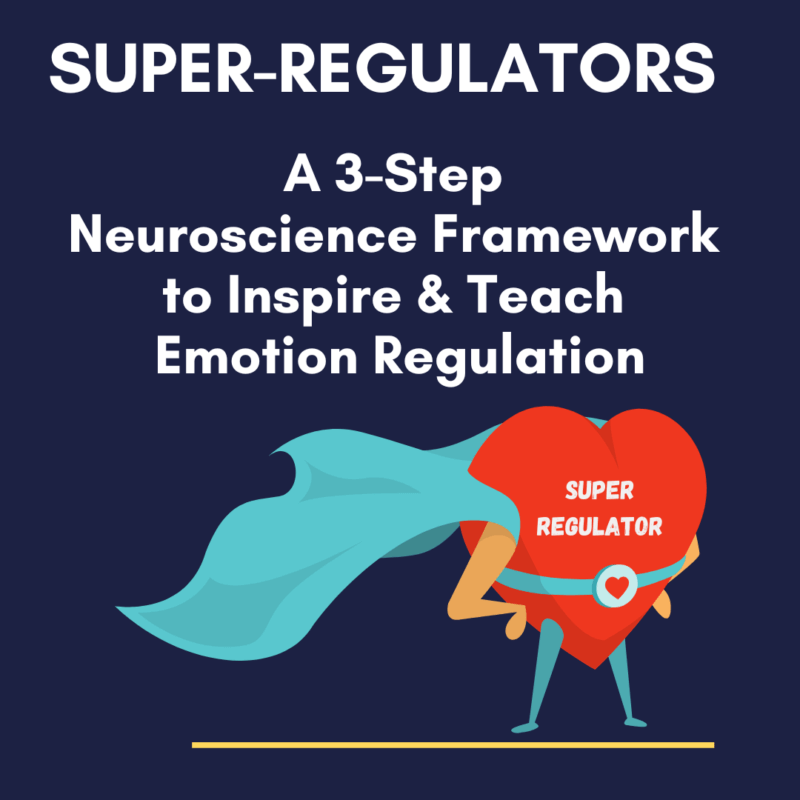
As humans, we are not born with self-regulation capacities...
Most regulation-based approaches teach control. But human thriving requires flexibility. This mini book introduces the concept at the heart of everything I teach—what it looks like when someone isn't just managing their state, but leading from it.
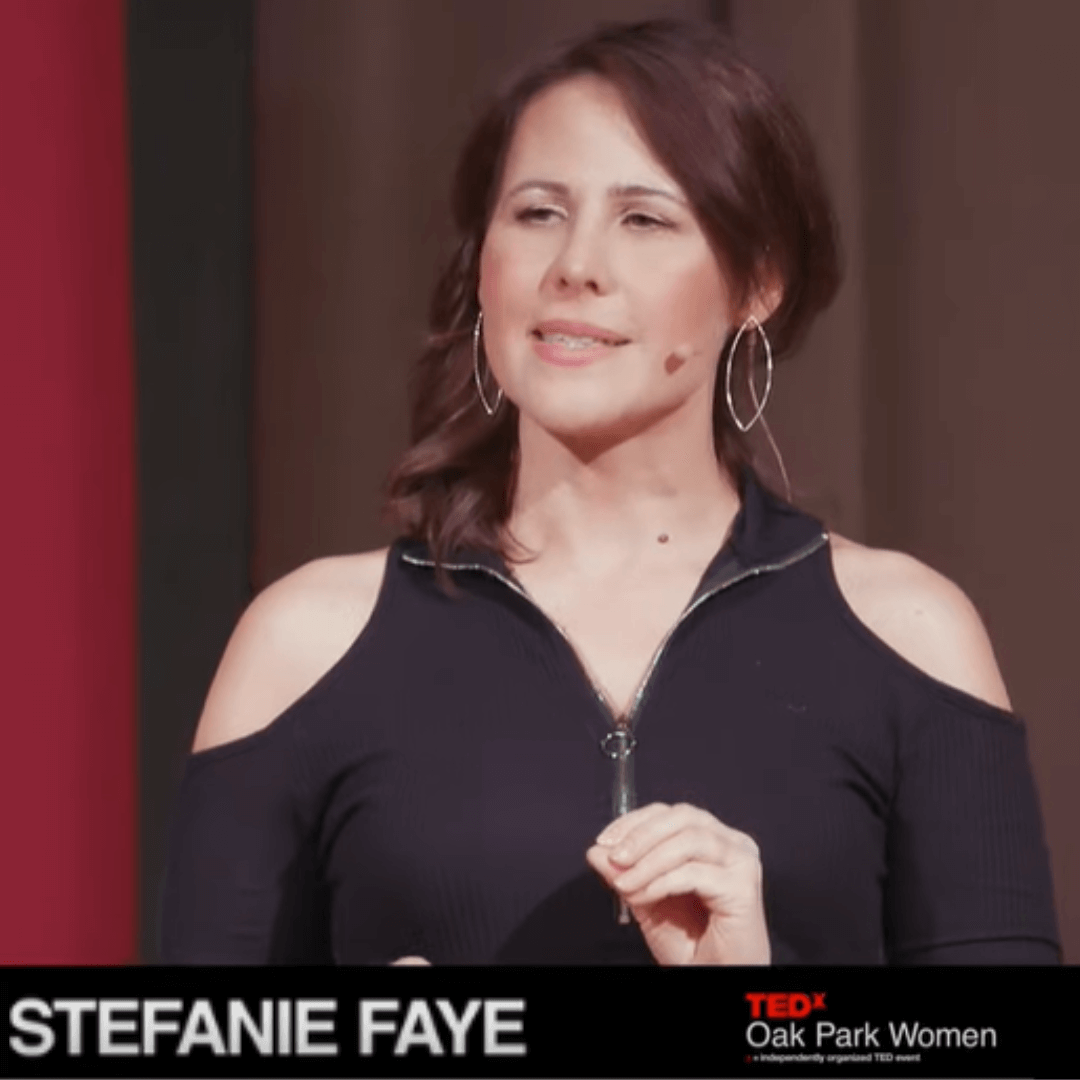
Hello! I'm Stef.
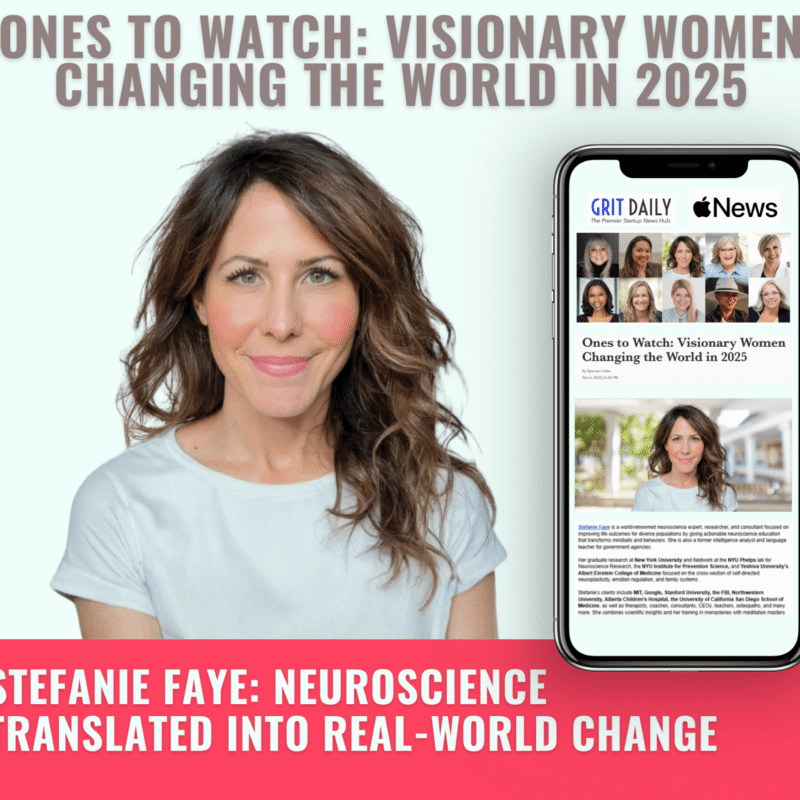
Nearly Two Decades of Translating Brain Science. On a mission to make sure the people doing the most important work don't get dismissed.
I've spent nearly two decades translating neuroscience for the rooms that push back the hardest — MIT, Google, Stanford, the FBI, Northwestern University, and UCSD School of Medicine.
I've conducted brain scanning research at NYU and meditated with monks. I've measured hearts and brains in intensive outpatient clinics and high-performance retreat centers.
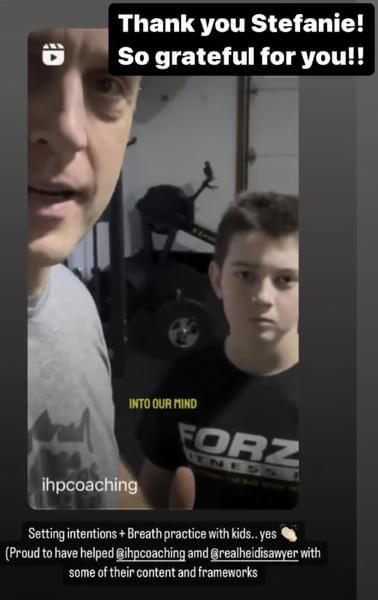
And the number one thing I've learned across all of it?
Powerful, life-changing work in the world often gets dismissed.. not because it isn't true, but because it's being delivered into nervous systems that don't yet feel confident enough that 'this is worth my time'.
Once you understand how to change that, everything changes.
That's what my training courses and content are built to give you. I hope you'll join me.
What neuroscience has helped me see
One of the biggest game changers in my life and work has been understanding the neuroscience beneath the things we so often TELL PEOPLE TO DO. Things like… Just breathe. Calm your nervous system. Change your mindset. Try to relax. These…
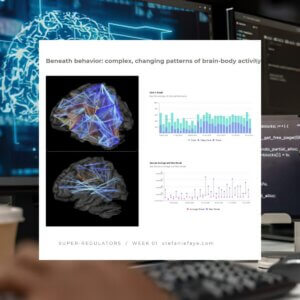
The ‘real’ goal of nervous system regulation: what i love seeing in brain maps
Last night, in our first live Super-Regulators™ Neuroscience Academy session, I shared some brain maps and other measurements that reveal the extraordinary human capacity to adapt, update and change. One set showed changes in patterns of brain connectivity over a…
Why “soft skills” are biological change agents
One of the questions we explore in our work at MIT is: How do we help wisdom travel? How do we help it move across disciplines, people and institutions that may be skeptical of its importance? How…