A few years ago, I spoke at a symposium in Berlin, where I was joined by engineers, neuroscientists, design thinking and creativity researchers from Stanford University, the Hasso Plattner Institute of Design , the Max Planck Institute for Human Development and the University of Bologna Marconi Institute for Creativity Research.
The theme was ‘Embodied Cognition & Creativity’.
We explored how to incorporate more of the body’s movements and wisdom into learning and innovation. We have been so focused on the brain that we’ve been neglecting the role of the BODY in all of this. Our bodies are constantly giving us signals as to what our reactions, triggers, needs and desires are.
However, we have been so focused on ‘thinking’ and talking that we’ve stopped listening to those subtle messages.
The better we get at paying attention to what our body is telling us in each moment, the better we get at noticing what triggers us – what causes us to feel anxious, sad, irritated. AND we get better at noticing what truly makes us feel alive and eager, or peaceful and content.
We also get better at making decisions that actually make us HAPPY.
Instead of choosing things because they’re the most familiar, or the most talked about (features of subconscious and cultural programming by advertising and ‘group think’)...
... We can make choices based on the subtle signals from our body and viscera (such as our gut, heart and skin).
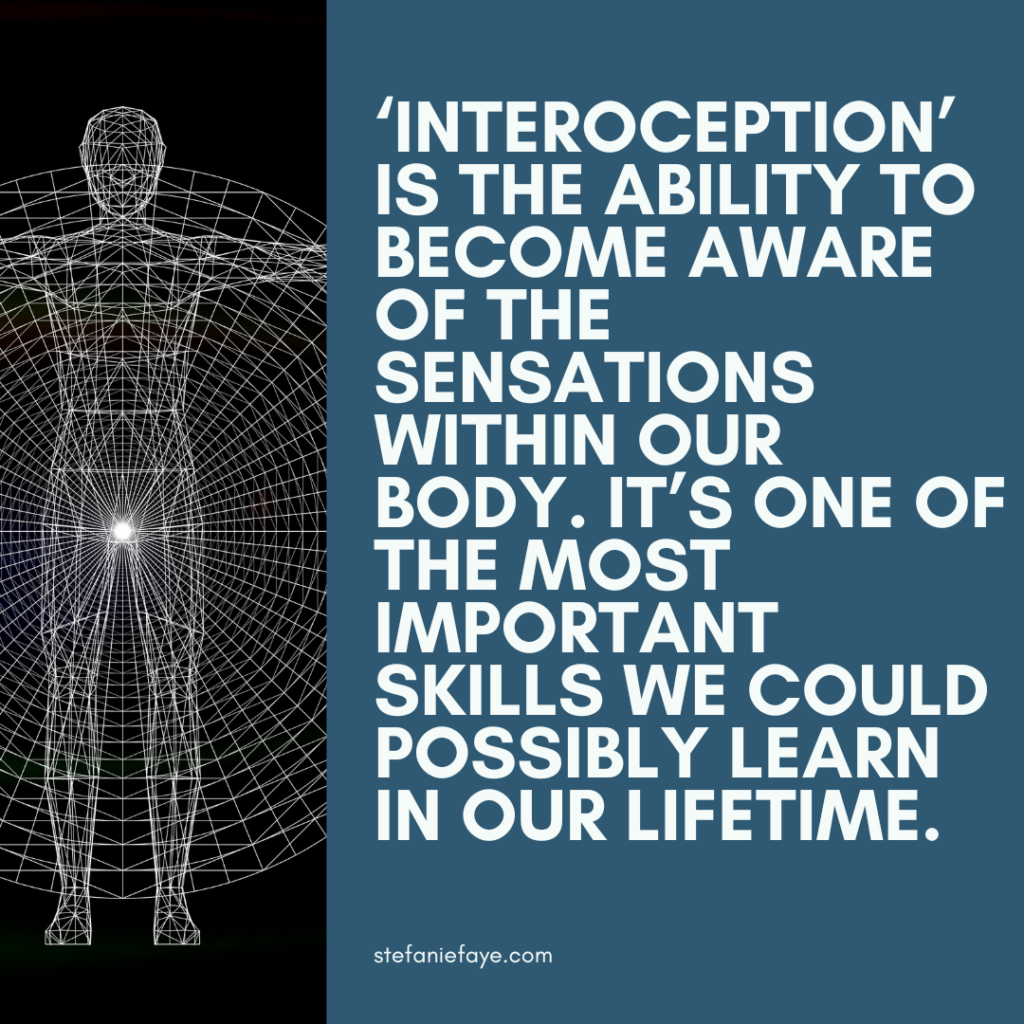
‘Interoception’ is the ability to become aware of the sensations from within our body. It’s one of the most important skills we could possibly learn in our lifetime.
How to do this?
Here’s a quote from one of my favorite books, The Body Keeps the Score:
"[…] In my practice I begin the process by helping my patients to first notice and then describe the feelings in their bodies – not emotions such as anger or anxiety or fear but the physical sensations beneath the emotions: pressure, heat, muscular tension, tingling, caving in, and so on.”
You can also learn more about this...
→ in one of my most popular podcast episodes: Self-Regulation: the remarkable skill that will make you a better human. Listen here
→ in my mini-course: Emotion Regulation Science: How to teach it so even skeptics use it - without it getting dismissed as "soft skills". Snag it here
#systemsthinking #mindfulness #embodied #neuroscience #coaching #coaches #executivecoach #leadership
Season 1 Episode 5 – Self-Regulation: the remarkable skill that will make you a better human