Articles
The Myth of “Acceptable Feelings” (and the science to debunk it)
There’s a story we’ve been told about emotional regulation that doesn’t quite match reality. Somewhere along the way, the narrative became about finding the technique—the breathing pattern, the grounding exercise, the magic formula that would keep us cool, calm, and…
Neuroscience of Critical Hope with Dr. Kari Grain
Podcast: Play in new window | Download
Hope is one of our most extraordinary human capacities. It allows us to sense possibility before we can fully see the path toward it. To imagine that something new can emerge from the conditions we are in now. And perhaps…
“But I already know growth mindset…” Perfect. Now explore the brain architecture underneath it
I know, I know… you already know growth mindset.. It’s been around for long enough now. Most of us are tired of hearing about it. You’ve seen the two columns. Fixed: I can’t do this. Growth: I can’t do…
“Soft skills” are biological mechanisms of change
One of the questions we explore in our work at MIT is: How do we help wisdom travel? How do we help it move across disciplines, people and institutions that may be skeptical of its importance? How do we help…
Wisdom asks us to be changed
Wisdom asks us to be changed by what we encounter. What does your brain do with information that doesn’t fit? Something we understand about the brain now more than ever is that it’s not so much reacting to the…
When nervous system tools meet a fixed mindset
The mindset you have at work may change when you’re in a challenging relationship or social interaction. Many of us have learned about growth mindset as it relates to intelligence and learning. Research questions start with: Do you believe…
The first time I watched an adult brain update
Before I taught neuroscience, I taught French to diplomats and government officials. Many of them expressed to me doubts about their ability to learn.. They would say things like ‘I’m not good at languages’, or ‘I’ll never sound natural.’…
What Nervous System Literacy actually means (it’s different than names of nervous system states)
I use the phrase nervous system literacy to talk about ‘how we talk about’ nervous system regulation – whether it’s about states, tolerance, regulation, tools, techniques. What I mean by ‘literacy’ is an ability to read nervous systems. What they…
You have no idea you’re doing this (an intelligence that doesn’t need your instructions…)
There are trillions of processes happening inside you right now. Signals are moving between cells and systems, your brain is making predictions from incoming information, your body is allocating energy and continually adjusting to what is happening around you. Almost…
Why our brains repeat what isn’t working.. even when we’re ready for something to change
Change has a metabolic cost. Our brains are very.. VERY good at conserving energy when possible. Of preserving what is already very well-worn and used. Patterns that have repeated many times require less energy. Anything that requires less energy in…
Your Nervous System is a Wise Being
There is so much information coming at us about how to optimize, regulate, breathe, count… how to upgrade our brains and nervous systems. It can be easy to be led astray by the certainty we get from certain voices, apps,…

The Super-Regulators Neuroscience Academy is Now Open
There is a particular kind of magic that happens when a group of people gathers around one question: How do we help human beings access more of their own intelligence? …Their capacity to regulate, adapt, see new possibilities….
Nervous-System-Science: 3 things I don’t do to reach people who resist ‘self-help’
“The great thing, then, in all education, is to make our nervous system our ally instead of our enemy.” — William James, Principles of Psychology (1890) For more than twenty years, I’ve worked with people who would never…
A question that neurologically opens us
A question I see come up a lot in coaching, facilitation, and teaching work is.. A question I see come up a lot in coaching, facilitation, and teaching work is.. “What should I do here?” Or “What should…
Why I stopped separating mindset from nervous system regulation
Our brain is a prediction machine. It is constantly running models built from its history – and then using this to predict and filter data about what’s about to happen, and what we’re capable of handling. It’s efficient…..

The Neuro-Architecture of Possibility
Mindset isn’t just a ‘soft skill’, ‘yay, just believe in yourself!’ topic… It’s part of the predictive architecture that leads people to interpret effort, stress, setbacks, identity, and what’s possible for them … in ways that either enhance their life,…
What gets lost when we label a nervous-system state?
A familiar word can narrow what we notice next. What if you can be in “flight” without going anywhere? When we say flight, we’re often talking about escape: moving away from whatever we believe the threat is. But…
You may know more neuroscience than you think: Especially if you’ve spent years paying attention to people.
I’ve spent almost two decades measuring nervous systems and mind-brain-body signals.. Brainwaves, heart rhythms, skin conductance, eye movements, facial expressions (facial electromyography). Something I see again and again as people fill out self-report assessments (before getting these physiological maps…
A mindset mistake many of us make
One phrase I hear a lot is: “limiting beliefs.” And I understand why. I’ve used it before, and it helps give a sense of something that holds us back.. The issue I see is that if we call…
How neuroscience can actually WEAKEN your teaching
There’s a strange moment happening with neuroscience right now. More people than ever know words like: Dopamine, ‘prefrontal’,neuroplasticity. And I love that people are interested. But I also see something else happen that can disconnect us from our own intuition…
The nervous system skill that changed a 5th grader’s behavior
Miss Stefanie! I have an indicator!” A 5th grader taught me something about nervous system literacy. … Years ago, when I was working as a school counselor, I met a fifth grader (I’ll call Elliot*). He was…

The brain doesn’t have one “growth mindset”
Someone can genuinely believe: “People can change.” And still believe: “I can’t change this.” There is not one single “growth mindset” for each person. And that mindset doesn’t stay in some static, fixed place. Someone can believe…
“Name it to tame it” is only part of the story
One of neuroscience’s most popular phrases leaves out something important. “Name it to tame it.” is a phrase made popular by Dr. Dan Siegel*. *He was a big fan of Mr. Rogers (a tv character who wanted to help…
How back-to-school/work brain activity can keep us stuck
Back-to-school, back-to-work… and sometimes back to old predictions. There’s a particular kind of energy emanating in the world for many of us right now.. Back to school. Back to work. Back to routines, schedules, meetings, classrooms, drop-offs, inboxes… Even…

How neuro-words can make us “know” less
Sometimes, the more nervous system language we learn, the less closely we look at the nervous system. “If you don’t obscure things with names, you can sense their inherent aliveness. They speak to you, there’s another dimension that reveals…
Nervous System Science: How We Learn to See Beyond Our Past
As children, we don’t get to choose what our environment is or what kind of system we are a part of. Since we don’t get to choose, we must adapt. That’s part of our nature as complex adaptive systems. Plasticity…
The Nervous System Cost of These Uncertain Times
“The universe is change; our life is what our thoughts make it.” -Marcus Aurelius* We are living in a time of so much dysregulating nervous system input. Uncertainty, unexpected events and changes.. Other people’s fear, anger and reactivity….
Neuroplasticity and the robot in the trash can
I remember years ago working with a young man that was ready to abandon his science project. I had created a “BRAIN camp” through a wonderful education organization, where I taught students and staff about mindset, brain plasticity and…
The science of why mindset changes behavior: the formula we’re often taught is backwards
Research shows us that when it comes to behavior change, we have been using a formula that is completely backwards: When we focus on performance or results, we are looking at the end point that flows out of various…
The Neuroscience of the shadow: Nervous systems sense what we leave out
Whether you call your work mindset coaching, leadership development, learning design, or something else.. if you’re working with human behavior and growth, you’re working with the nervous system. As I mentioned yesterday, framing personal growth and self-development in purely aspirational…
Start in the shadow: the nervous system’s dark side
i love that brains can change. I get excited to talk about neuroplasticity. But something I’ve learned over many years studying and teaching the biology of human transformation and performance is that.. Cheerleading or over-positivity about ‘you can…
The neuroscience behind “soft skills”
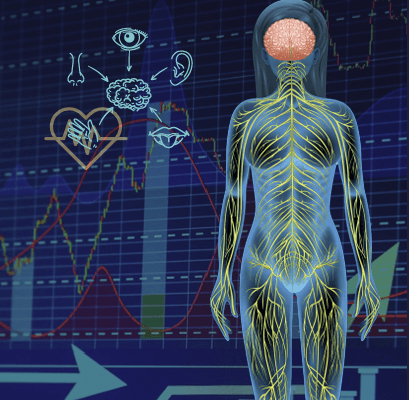
Meditation. Breathwork. Somatics. Mindfulness. Emotional regulation. These things are changing people’s lives every day. But what I have observed over many years, is that these incredibly powerful tools are sometimes explained in ways that either: a) offer something too generic…
Mixed, Messy Feelings: why our brain needs contradictions
“Feelings can annoy or delight us, but that is not what they are for […]. Feelings are for life regulation, providers of information concerning basic homeostasis or the social condition of our lives.” —Antonio Damasio, The Strange Order of Things …
Bravery has a biology: how the brain learns to move toward
So much of what we might consider ‘brave’ or courageous is actually intertwined with something less obvious. A lot of what we also might consider as a sense of power and agency also reflects this same skill. …
Two kinds of uncomfortable: what the brain can’t tell apart
The brain is an energy-conserving system. When something requires effort and doesn’t come with a guaranteed return, it gets tagged as be cautious. That tag often shows up as… yuck. I don’t like it. Sometimes that signal is protecting us from real…
Your nervous system as a bio-collective contribution
We are vibrational beings. At every moment, we are transmitting frequencies and vibrations that reflect our internal state, whether we realize it or not. You’ve likely felt this. The teacher who walks into a classroom and the room settles. A…
What I see in brains and hearts that gives me confidence
For almost 20 years, I’ve been watching what happens inside people while they’re trying to learn, change and grow. I’ve looked at brain activity, heart rhythms, eyes, faces, skin and other physiological signals. I’ve done this in high-performance settings and…
Information exhaustion has a brainwave signature: these two words can alter our brain activity
We are in an era of information exhaustion. So many ideas and words coming at us every day, every hour. What we don’t always realize: Every piece of this information activates and shapes our brain. (whether we realize…
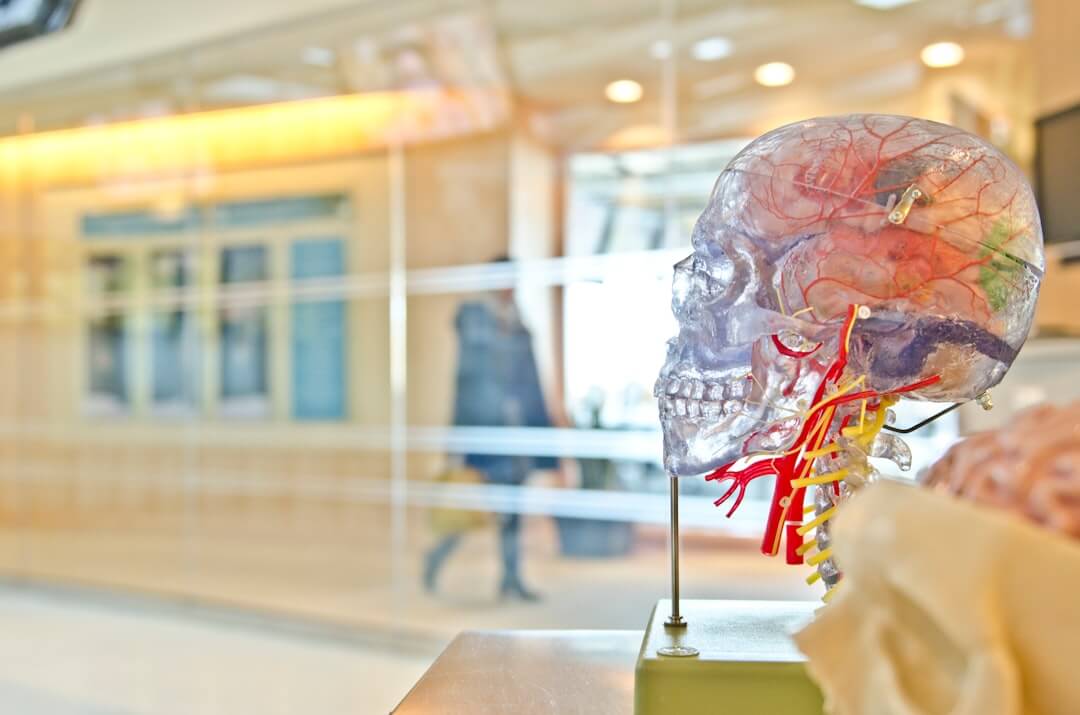
Don’t seek calm, seek this: what brainwaves have taught me
An aha I had many years ago as I worked with brain waves and heart rate variability in an intensive outpatient clinic… … was that many people were arriving with an idea that there was some state they were supposed to…
The problem with memorizing brain parts: Why neuroscience explanations age better when they’re based on systems
What happens when the neuro-buzzwords and theories everyone is using turns out to be incomplete? When we build our explanations on someone else’s terminology, we inherit whatever happens to that terminology later. Some of it gets debunked. Some of it…
The neuroscience aha my students never forgot
Years ago I was a school and family counselor. I had recently finished graduate studies at NYU, where I got to take part in incredible research at the Institute for Prevention Science and at the Phelps Lab for Neuroscience Research*….
The Brain’s Malleability Mindset: Two questions that reveal whether someone believes change is possible.
There are entire territories of a person’s life that are affected by their mindset. And that mindset will affect whether they’ll ever even try what you’re suggesting. Specifically a ‘malleability mindset’.. Personality malleability. Can I actually become someone who responds differently, or is this…
3 ways the brain filters information: your ideas need to make it past these filters
In a previous article, I wrote that every idea you offer is landing on a nervous system (with a history and in a particular state)… if that system isn’t in a state that allows it to open to new…
How to talk about neuroplasticity: Giving language to one of the brain’s greatest strengths.
“[…] every human has the built-in power to improve, to change for the better, to significantly restore and often to recover. Tomorrow, that person you see in the mirror can be a stronger, more capable, livelier, more powerfully centered, and…
Fixed mindset has a neuroscience problem: Why neuroscience supports growth more than fixed ability
In many ways, growth mindset is more neurologically ‘accurate’ than fixed mindset. A growth mindset reflects the idea that we can build and evolve our abilities and intelligence. This also includes our responses to stress and to other people. A…
Human Systems Resilience Free Mini-Book
There is a quiet intelligence inside you … one that knows how to bend without breaking, to repair what has been ruptured, to return to connection to oneself and others after a disruption. Science calls this resilience: the brain…
The Neuroscience of the Comeback: if we measure regulation by never getting triggered, we’re measuring the wrong thing
There’s a version of “being regulated” that sounds a lot like being untouchable. Calm. Collected. Unshaken. Always able to find the breath, hold the space, stay present no matter what walks through the door. And if…
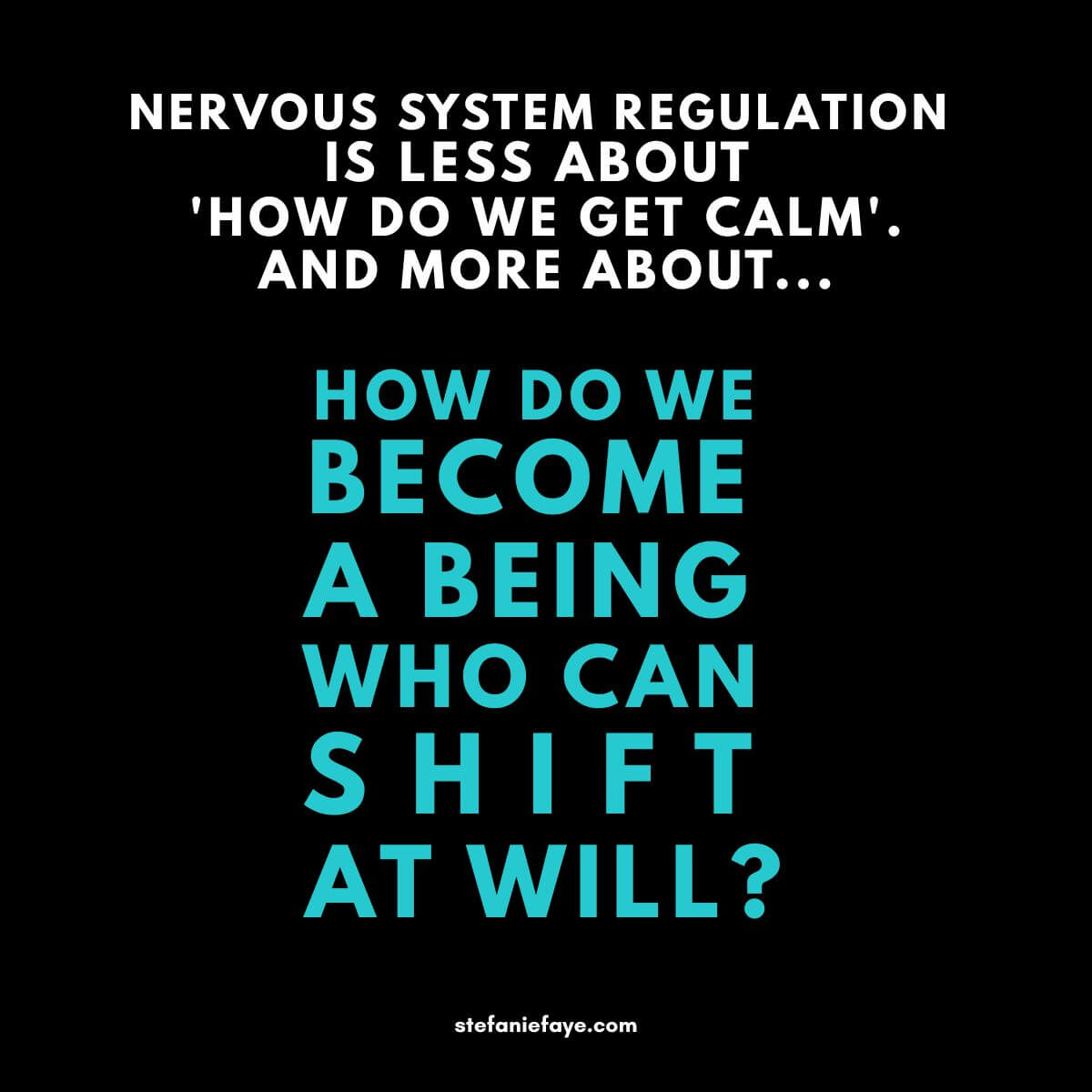
There is no magic state (what our brainwaves tell us)
In a group training I ran recently, I started with a mindful moment. Some people in that room needed to slow down. Others needed the opposite. A little lethargic, a little foggy, and what would actually help them was to…
The Neuroscience of What’s “Possible”
Our brain is a prediction machine. It is constantly running models built from its history – and using them to predict and filter data about what’s about to happen, and what we’re capable of handling. It’s efficient…..
Your Nervous System Is Already Teaching:
I’ve been writing a lot about mindset lately.. about what a person believes regarding their own capacity to change, and how much that shapes whether anything we offer them takes hold. I’ll be talking a bit more about mindset tomorrow…
The neuroscience of false growth mindset
For the past 18 years, I have been teaching the neuroscience of growth mindset to audiences all over the world. I’ve developed curriculum for non-profits, international organizations and schools, all to help more people understand the power of the human…
Why Mechanisms Beat Memorized Neuro-Words: Nervous systems don’t always follow acronyms
There’s a difference between knowing the words and knowing the mechanism. Many of us have collected vocabulary about our internal states. ‘Dopamine menus’. ‘Dorsal vagal shutdowns’. Acronyms from someone else’s framework. These phrases spread because they give us something to…
The safest place your nervous system can return to
“Emotions and the feelings are not a luxury, they are a means of communicating our states of mind to others. But they are also a way of guiding our own judgments and decisions. Emotions bring the body into the loop…
Your brain was born with a growth mindset: What happened to it… and how to get it back.
You didn’t learn to walk by getting it right. You fell. Over and over. And your brain treated every fall as data… fuel for the next attempt. In many ways, you were born with a growth mindset. Then your…
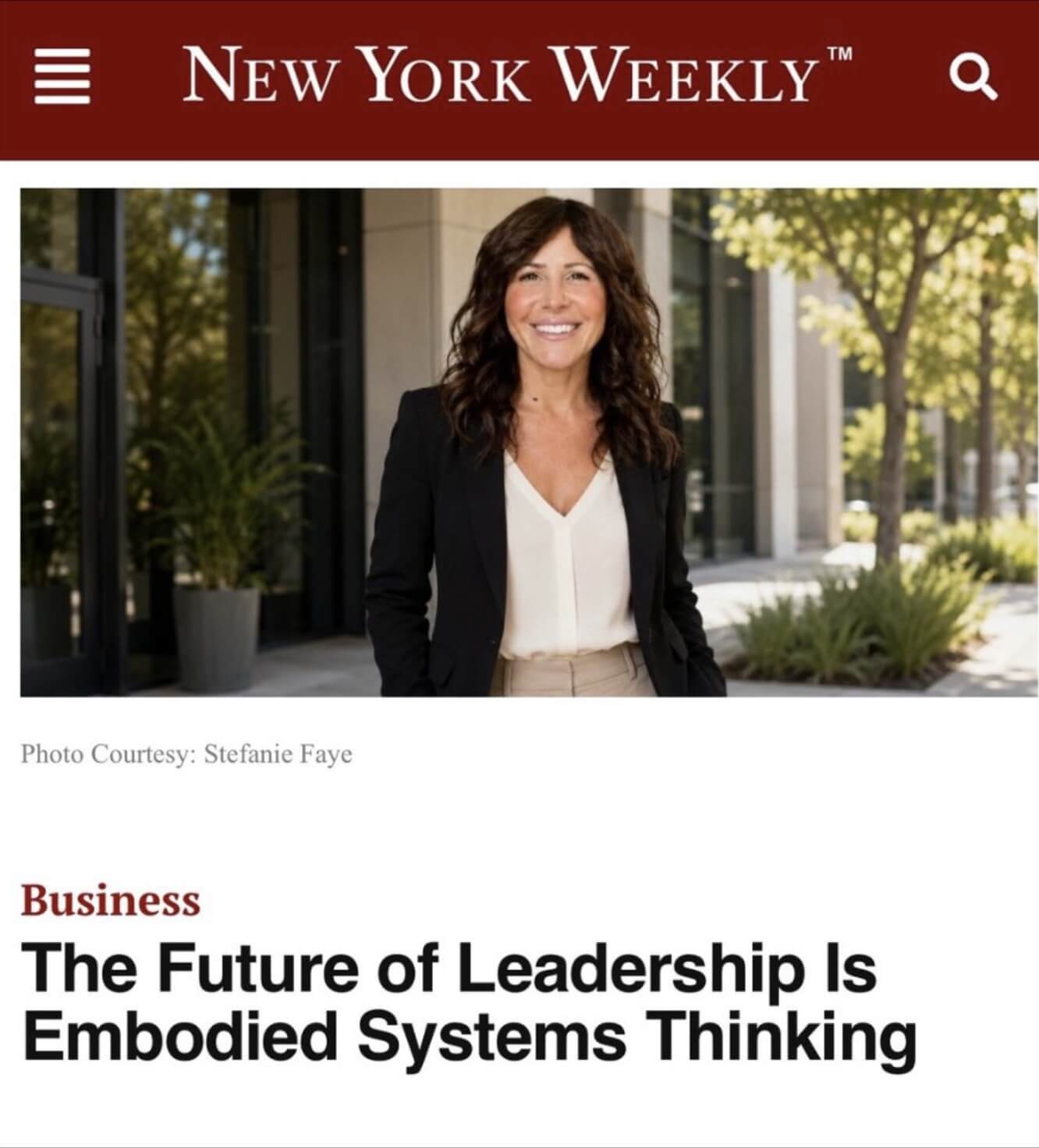
The Future of Leadership is Embodied Systems Thinking
The Future of Leadership Is Embodied Systems Thinking The leaders who will guide us through complexity, polarization, and problems that seem to repeat themselves, are the ones learning to work with the biology of how humans actually perceive, connect, and…
The Neuroscience of the Inner Critic: The way you talk to yourself has a history.
Notice what happens the next time you get something wrong. Is there a voice that helps you stay open and keep trying? Or one that makes you want to shut down… or give up? Developmental neuroscience (one of my ‘favorite’…
Why mistakes sometimes build the brain, and sometimes don’t: how “failure” affects the brain
Within about 100 milliseconds of making a mistake, brains show a burst of electrical activity. Before a person consciously registers “I got that wrong,” their error-monitoring systems have already flagged the mismatch between what they predicted and what actually happened….
The hidden nervous system signal of “You’re too much right now.”: what “calm down” actually asks of the brain
Many of us have heard, or said, the words “calm down”. We use it as a way to try to help someone who is dysregulated. But lets take a look at what “calm down” actually asks of the brain. …
A biological explanation of HOPE… and the one ingredient hope alone can’t give you
Humanity is at a threshold. We have more information about how to ‘live life to the fullest’ than any generation before us… and yet more people than ever still feel stuck. Some don’t realize there’s a better way…
Every nervous system leaves a trace: what is yours contributing to the field
“Breakthroughs come when people learn how to take the time to stop and examine their assumptions.” Peter M. Senge Why Your Nervous System Matters More Than You Think Our words matter. But so do our: facial expressions, tone of…
The brain activity that comes before an answer: Your neural circuitry needs something before it needs a solution…
There’s a moment, right before we reach for the answer, when something else is available to us. The next time a new idea unsettles you, or you notice yourself wanting the tool, the formula, the instruction for what to do…
The neuroscience of why “believe in yourself” stops working: Prediction, plasticity, and what happens when people finally understand why
There was a time when simply saying, “Believe in yourself,” was enough. Today, we live in a world with unprecedented access to information. Within seconds, we can ask AI almost any question. We can read research papers, listen to podcasts,…
One micro-signal can rewrite a future: Small signals shape what the brain predicts
There are moments in every person’s life that quietly divide time into two parts. Before they believed something… and after they believed something new. Sometimes that moment arrives through a conversation. Sometimes through a teacher, coach, leader, therapist, parent……
Brains fascinated me long before I studied them. But what actually pulled me into neuroscience was watching a single shift in someone’s thinking change the trajectory of an entire life. I wanted to understand what had just happened. What makes…
What the brain is doing when someone says “I can’t”
When someone says “I can’t,” the brain is usually offering a prediction. A forecast, drawn from past experience, that feels like truth from the inside. The brain is a forecasting system. Drawing on past experience, it continuously estimates: what’s…
The neuroscience underneath growth mindset: a quieter, deeper form of independence and power
This week, many places in the US and in the world are celebrating the idea of independence. There’s a quieter, inner freedom worth naming, too. The freedom to revise what your brain believes is possible. Every prediction the brain…
The neuroscience of systems thinking: Why memorizing brain words isn’t the same as understanding the nervous system.
We often reach for words from someone else’s theory. Dorsal. Ventral. Amygdala. Sympathetic. Growth mindset. We attach them to brain structures and expect them to create understanding. But a word doesn’t become meaningful simply because someone can repeat it. …
The neuroscience behind “soft skills”: The operating system underneath change
Meditation. Breathwork. Somatics. Mindfulness. Emotional regulation. These things are changing people’s lives every day. But when they’re explained vaguely, people categorize them as “soft skills” instead of biologically meaningful transformation. Here’s what makes the difference: Give someone a technique and…
The Neuroscience of Letting Go: What happens in the brain when you stop trying to control what’s next?
The Brain Signature of Surrender There’s a moment I come back to again and again, that comes from faciliating transformational journeys for people during intensive retreats a few years ago for a wellknown company. Our clients (often CEO’s,…
When the world shakes, regulate and return: a nervous system invitation toward coherence
When the world shakes, return The world keeps asking us to react. Every hour brings something new to absorb, answer, brace against. The nervous system reads it all as a signal to mobilize. There is another option. Quieter, and far…
Neuroscience as the language that makes “possible” real
“Your brain – every brain – is a work in progress. It is ‘plastic.’ From the day we’re born to the day we die, it continuously revises and remodels, improving or slowly declining, as a function of how we use…
Humans call this stubbornness. the brain calls it something else
When something doesn’t work .. a message ignored, a person who won’t engage, an idea that goes nowhere .. most of us read it as failure. The brain reads it that way too. And there’s a reason. Deep in the…